abapdotabapdeveloper-tools
来源资料待手动核验
BDD / TDD assertion library for ABAP, inspired by Chai.js
BDD / TDD assertion library for ABAP, inspired by Chai.js.
Chai.js allows you to work with 3 different flavors:
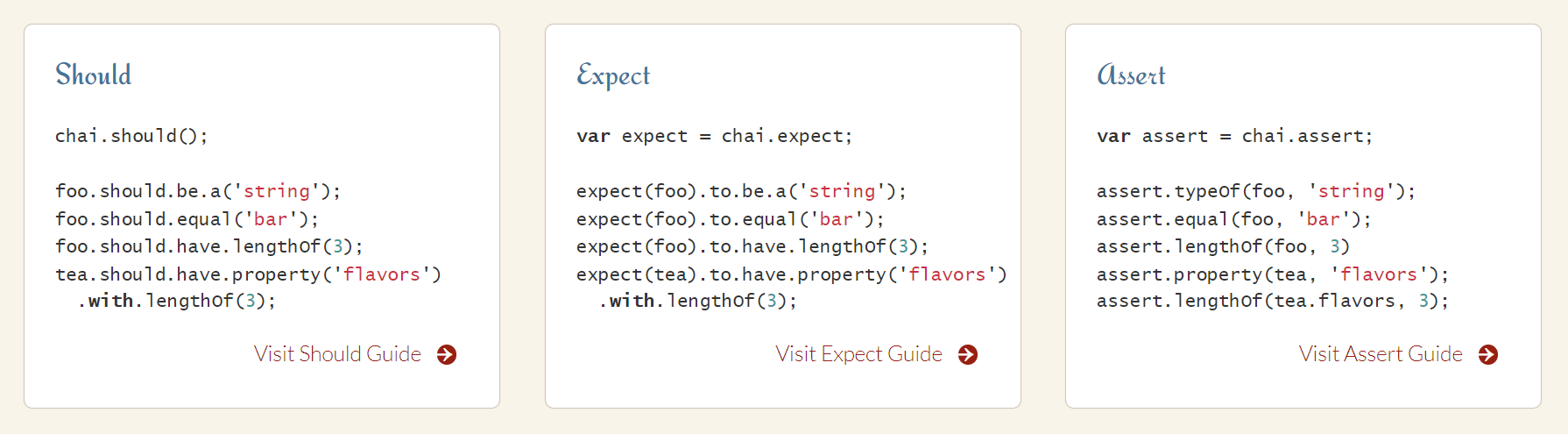
The goal of ABAP Sencha is to provide similar functionality in ABAP on top of the existing ABAP Unit framework to leverage its tooling and IDE support.
In a nutshell:
foo.should.equal('bar'); // chai.js
the( foo )->should->equal( 'bar' ). //ABAP Sencha

expect(foo).to.equal('bar'); // chai.js
expect( foo )->to->equal( 'bar' ). // ABAP Sencha

assert.equal(foo, 'bar'); // chai.js
assert->equal( actual = foo expected = 'bar' ) // ABAP Sencha
assert( foo )->equals( 'bar' ). // ABAP Sencha
ABAP Sencha tries to bring the style known from chai.js into ABAP. Obviously not everything, as it is not JavaScript. The main goals are:
should, expect, and assert.Each of the style is introduced by a dedicated method, followed by
a language chain(s) ending with a check method like equals - which are
basically wrappers over cl_abap_unit_assert methods. Optionally, a negation
not can be used, as well as and method for chained, multiple checks.
The current version of the project is 1.0.0-beta.
I prefer chai.js and find tests written in the expect or should style to be more
readable compared to other forms. In the JavaScript world, chai is always my
preferred choice as it offers a good balance between readability and ease of use.
If you prefer tests to be fully described using natural language, you can check
out the BDD library for ABAP - Cacamber.
expect styleThis style is introduced by the method expect.
expect( actual )->equals( 2 ).
expect( actual )->is->equal_to( 2 ).
expect( actual )->not( )->equal_to( 4 ).
expect( char_value )->has->length_of( 3 ).
expect( 1 )->to->be->one_of( some_values ).
expect( actual )->to->be->true( ).
expect( |def| )->contained_in( some_string_table ).
* and more
should styleIn ABAP you can't use the original chai.js approach like someObject.should....
Additional "entry" methods are introduced - value/v/the/value_of after
which you can continue to use should style.
the( actual )should->equal( 2 ).
value( actual )->should->be->equal_to( 2 ).
value_of( actual )->should->not( )->equal_to( 4 ).
v( char_value )->should->have->length_of( 3 ).
value( 1 )->should->be->one_of( some_values ).
the( actual )->should->be->true( ).
the( |def| )->should->be->contained_in( some_string_table ).
* and more
assert styleCL_ABAP_UNIT_ASSERT=>... is the assert style already available in ABAP Unit,
but ABAP Sencha brings the assert style from chai.js:
assert( )->equal( actual = act expected = 1 ).
assert( actual )->equals_to( 8 ).
You can use language chainable properties to improve readability:
expect( actual )->does-not( )->equal( 4 ).
the( flag )->should->not( )->be->true( ).
not( )Most of the check methods can be negated with not - in case the method
is not working with negation, an exception will be thrown.
expect( actual )->not( )->equal_to( 4 ).
the( actual )->should->not( )->be->true( ).
assert( foo )->is->not( )->equal( 'bar' ).
Some methods have the same functionality exposed via different names,
such as equal, equals, equal_to, match_pattern, matches_pattern,
and so on. You can use whichever name feels more readable to you.
andYou can chain related checks with and if you prefer:
expect( bonus-periodic )->is->true( )->and( bonus-amount )->equals( 70 ).
value( bonus-code )->should->equals( 'B' )->and( bonus-amount )->should->equals( 70 ).
assert( bonus-periodic )->is-true( )->and( bonus-amount )->equals( 70 ).
ABAP Sencha introduces additional methods from the JavaScript world. These methods can be used to provide descriptions, which can be helpful due to the limited length of names in ABAP.
Note: maybe in future those methods provides additional functionality, there are some ideas.
given( 'the user uses the CET timezone' ).
timezone_mocked_for( cet ).

when( 'we request the header' ).
DATA(header) = cut->get_user_header( ).

then( 'it should be prepended by CET phrase' ).
the( header )->should->cover_pattern( '*CET user*' ).
They can be also used for making tests readable using a simple approach:
" redefined methods implemented
METHOD given.
  super->given( ).

  IF description CP '*request*report*configured*'.
    configure_request_report( ).
      " ...
  ENDIF.
ENDMETHOD.

METHOD given.
  super->given( ).

  " see method daily_report_request
  IF description CP '*request*report*configured*'.
    configure_request_report( ).
    " ...
  ENDIF.
ENDMETHOD.

METHOD when.
  super->when( ).

  " see method daily_report_request
  IF description CP '*report*requested*'.
    cut->request_report( ).
  ENDIF.
ENDMETHOD.

METHOD then.
  super->then( ).

  " see method daily_report_request
  IF description CP '*module*receives*request*'.
    verify_expectations( some_module_mock ).
  ENDIF.
ENDMETHOD.
...
" test method
METHOD daily_report_request.
  given( 'request report is configured' ).
  when( 'report is requested' ).
  then( 'module receives request' ).
ENDMETHOD.
You can refer to the class ZCL_ABAP_SENCHA_SAMPLES for the code samples.
Aside from the ABAP Unit check methods, there are additional ones inspired by chai.js:
length_of for checking the length of internal tables or character-based valuesone_of for checking if a value is a member of an internal tablecontained_in for checking if a value is contained in a string, number or an internal tableThere are handy methods that wrap some functionalities related to test doubles:
mock, get_mock_for, get_test_double_for, create_test_double: wrappers
for cl_abap_testdouble=>createconfigure_call: a wrapper for cl_abap_testdouble=>configure_callverify_expectations, verify: wrappers for cl_abap_testdouble=>verify_expectationsInherit your test class from ZCL_ABAP_SENCHA to gain access to all the methods and chaining words.
The class has documentation available via ABAP Docs. The exported, online version is available on https://wozjac.github.io/abap-sencha/.
Please check the unit tests in ZCL_ABAP_SENCHA for usage examples.
Additionally, you can check the sample class ZCL_ABAP_SENCHA_SAMPLES.
NOT - means the method might be negated, like not->cover_pattern("abba")
| CL_ABAP_UNIT_ASSERT | ABAP Sencha |
|---|---|
| ASSERT_BOUND, ASSERT_NOT_BOUND | BOUND (NOT), NOT_BOUND |
| ASSERT_CHAR_CP, ASSERT_CHAR_NP | (NOT) COVER_PATTERN |
| ASSERT_DIFFERS | NOT->EQUAL |
| ASSERT_EQUALS | EQUAL |
| ASSERT_EQUALS_FLOAT | use EQUAL + float tolerance parameter |
| ASSERT_FALSE | NOT->TRUE, FALSE |
| ASSERT_INITIAL, ASSERT_NOT_INITIAL | (NOT) INITITAL |
| ASSERT_NUMBER_BETWEEN | BETWEEN |
| ASSERT_RETURN_CODE, ASSERT_SUBRC | EXPECT_SUBRC, EXPECT_RETURN_CODE |
| ASSERT_TABLE_CONTAINS, ASSERT_TABLE_NOT_CONTAINS | (NOT) CONTAINED_IN |
| ASSERT_TEXT_MATCHES | MATCH_REGEX |
| ASSERT_THAT | SATISFY |
| ASSERT_TRUE | NOT->FALSE, TRUE |
| ASSUME_TRUE, ASSUME_FALSE | ASSUME->TRUE/FALSE |
| ASSUME_THAT | ASSUME->SATISFY |
| FAIL | FAIL |
| SKIP | SKIP |
The source code syntax is checked using abapLint v740sp08
Cloud version.
ABAP Sencha functionality is delivered by one big class with internal redundancy. This is intended design, as its goal is to avoid additional calls in the ABAP Unit test framework stack traces as much as possible (which would be present if the functionality would be split into multiple, smaller pieces of code).
This plugin is licensed under the MIT license.
Feel free to contact me: